What matters for this use
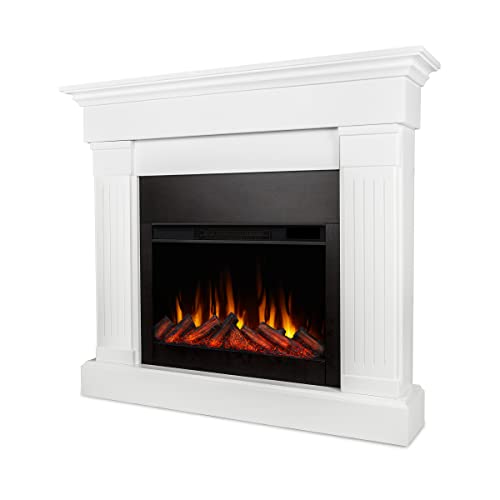
Compare complete mantel packages and freestanding electric fireplaces by assembled width, included firebox and stated heater output.
Check the stated dimensions and mounting method against your own fireplace or wall before buying an accessory. A screen, mount or remote that looks similar in photographs may not fit, and a shared brand name is not evidence of compatibility.
Use the supplemental heat planner to explore a simplified heating scenario, then read the exact listing and manufacturer manual. Read our research methodology.
How the selection works
We include complete fireplace listings with a captured Amazon average and positive review count for the exact ASIN. Each shortlist follows its stated installation, furniture or complete-package criteria. Initial order is the raw blended editorial score descending, with listing slug as a stable tie-break, not a quality distinction. Displayed scores are raw / 10 to one decimal; genuine ties remain. Use the sort controls to explore other orders. These ratings summarize review evidence and documented attributes, not physical testing.
Manufacturer documentation and exact listing details answer different questions. A seller title identifies the listing but does not prove dimensions, performance or accessory compatibility. We do not award best value without verified prices.
Documented spec fit = 100 × [0.35 × min(stated width in inches / 60, 1) + 0.30 × (heater output stated in watts or BTU ? 1 : 0) + 0.20 × (supply voltage stated ? 1 : 0) + 0.15 × (installation type stated: recessed, wall-mount or freestanding ? 1 : 0)], rounded to a whole number. The width must appear as an inch figure in the exact Amazon listing title; the heater output must carry an explicit W or BTU unit in the listing text, and a bare number is never read as an output. This index summarizes how completely a listing documents its size, heat output, electrical supply and installation type — it is not a heat test, not a measurement of flame realism, not a safety judgment and never a promise that the unit will heat a given room.
Documentation completeness = 100 × [0.5 × min(feature bullets / 8, 1) + 0.3 × min(listing images / 5, 1) + 0.2 × (brand stated ? 1 : 0)], rounded to a whole number, computed from the stored Amazon listing record when the listing title never states a width in inches. It measures how completely a seller documents a listing — nothing about how the fireplace performs or looks in a room.
Where Amazon publicly displays customer reviews for a listing (average star rating and review count captured from the public product page), the raw editorial score is 100 × [0.45 × (Amazon average / 5) × min(review count / 50, 1) + 0.35 × min(log10(1 + review count) / log10(1 + 5000), 1) + 0.20 × documentation score / 100]. The confidence factor min(review count / 50, 1) damps averages based on very few reviews, and the logarithmic volume term rewards large public review volumes, so widely and highly reviewed listings rank ahead of thinly reviewed ones. Listings with no captured public review data use the documentation score alone. This combined index reflects the public Amazon reputation and the listing documentation — it is not a physical test and not our own product testing.
The displayed editorial rating is the raw blended score divided by 10, shown to one decimal on a 0-10 scale. There is no catalog normalization, rank interpolation, forced winner, forced floor or artificial gap. Equal scores remain equal: the available data does not justify a distinction. Ranking uses the unmodified raw score descending, then listing slug for exact ties; slug is a stable identifier, not a quality signal. The same raw score always has the same display rating in every shortlist. This is not a physical test result or an Amazon customer rating.